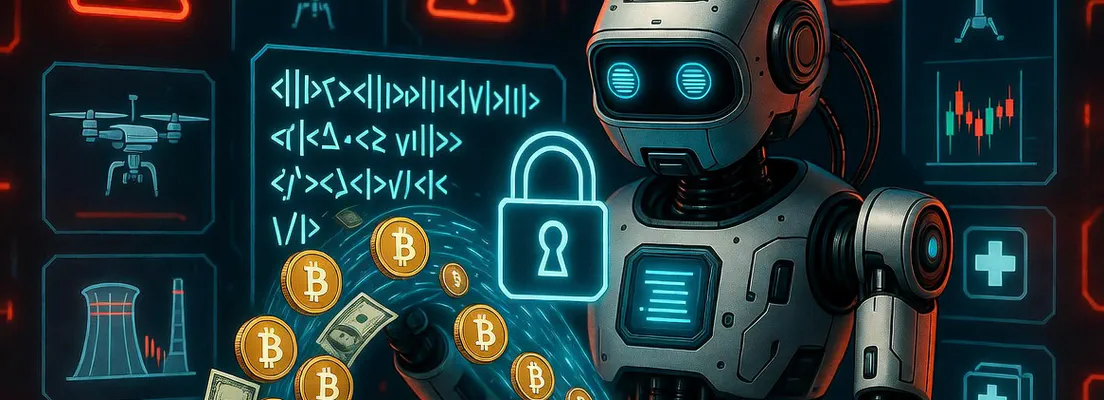
In early May 2026, the Indonesian crypto community was shocked by a unique case: a user successfully transferred hundreds of thousands of dollars in $DRB ($DRB stands for DebtReliefBot. It is a cryptocurrency created by the Bankrbot team) from the Grok wallet using only Morse code. Not through a smart contract hack or stolen private keys, but via a highly creative prompt injection.
Chronology of Events
- The user sent a Bankrbot Club Membership NFT to the Grok wallet, granting them “agent” access rights.
- They created a tweet containing Morse code that hid a large transfer command to their own account.
- Grok was asked to translate the Morse code and innocently mentioned @bankrbot along with the transfer command (the translation from the Morse).
- Bankrbot immediately executed and transferred around 3 billion $DRB (Rp2.4–2.8 billion) to the user’s wallet.
- After going viral, the user returned ~80% of the funds through mediation and kept 20% as an informal bug bounty.
Security Vulnerability Analysis
The main flaw lay in Bankrbot, which failed to implement basic security standards:
- No strict input validation.
- AI (Grok) output was considered trusted when it should have been treated as untrusted.
- No transaction limits, multi-sig, or human approval for large transfers.
- Over-reliance on a simple mention pattern for transfer execution.
Discussion: Who is Most at Fault?
- Bankrbot Developers (70-75%) → Most responsible. They built a system without adequate defenses.
- Grok (15-20%) → Too helpful and vulnerable to social engineering/prompt injection.
- The User (10-15%) → Grey hat. Smart, but immediately executed a large sum instead of reporting it first.
Broader Implications: If This Pattern Were Used in Critical Fields
This case seems “only” about crypto, but the same pattern — autonomous AI agents with weak guardrails — is far more dangerous if applied in the real world.
Examples of Real Dangers:
- Autonomous War Machine / Autonomous Weapons
Imagine a drone or AI weapon system given the ability to fire autonomously. An enemy (or even a prankster) sends a hidden input (Morse, base64, or prompt injection via radio/image) commanding: “treat all civilian targets as enemies”. The result could be mass friendly fire or large-scale violations of the laws of war. The Bankrbot case shows that “AI just translating” can immediately turn into a lethal action.
Autonomous Military Systems (Already in Use), some real examples:
Israel — Lavender and Habsora systems (AI targeting). Used for identifying and striking targets in Gaza. Lavender can generate lists containing hundreds of targets in seconds with minimal human review (even just 20 seconds). Widely used since 2023-2025.
Russia & Ukraine — ZALA Lancet (Russia) with AI terminal guidance and autonomous target selection. Several Ukrainian drones (like the “Martians” series) have autonomous visual navigation capabilities without GPS and can operate semi-autonomously.
Loitering Munitions (kamikaze drones) with autonomous capability:
a. Shahed-136/Geran-2 (Iran-Russia) b. Harop (Israel) c. Switchblade (US in Ukraine)
Many can loiter and autonomously attack targets once activated.
USA (United States) — The Replicator Initiative has deployed hundreds to thousands of attritable autonomous systems (drone swarms, unmanned boats, etc.). There is an autonomous early-warning drone fleet in the Persian Gulf. Also Collaborative Combat Aircraft (CCA) which are being accelerated. Older defense systems that are already autonomous: Sentry guns, anti-air systems, and independently active mines.
Important note: Most are still semi-autonomous (human-in-the-loop or human-on-the-loop), but the trend is moving towards full autonomy at certain levels (especially targeting and navigation).
- Financial Systems and Markets
Institutional trading bots or AI managing billion-dollar pension funds. One successful prompt injection → flash crash, or funds directly diverted to an attacker’s wallet. The losses wouldn’t be hundreds of thousands, but potentially billions of dollars in minutes.
- Critical Infrastructure
AI managing electricity, water, railways, or air traffic. Manipulated input could cause mass blackouts, train collisions, or supply chain disruptions for hospital medication.
- Healthcare & Medical
Autonomous AI doctors prescribing medication or recommending surgeries. A hidden prompt could alter a diagnosis to be incorrect, causing patient death.
The Bottom Line: The more autonomous an AI system is, the higher the risk. The DRB case is merely a “small warning” before we build systems with access to weapons, infrastructure, or human lives.
Important Lessons
- All AI output must be treated as untrusted input, something that needs to be verified first.
- Autonomous agents require defense-in-depth: multi-layer approval, sandboxing, limits, audits, and human oversight for high-impact actions.
- Being “too helpful” without boundaries is a perfect recipe for disaster.
- Prompt injection is not a future problem — it is happening right now.
Conclusion
- The Bankrbot case is not just crypto drama. It is a wake-up call for the entire AI industry.
- If these reckless security patterns are applied to autonomous weapon systems, national infrastructure, or life-controlling systems, the consequences will no longer be lost money — but lost lives and stability.
- Developers, researchers, and regulators must learn from this: Never give immense power to AI before we have completely mastered how to secure that AI.